


What weather can i expect on my Nordic cruise?
Spring - March to May
- Spring is a gentle transition into warmer days, although the weather can change quickly
- Expect cool mornings, milder afternoons, occasional rain and some lingering snow further north
- Daylight increases noticeably through April and May
Typical temperatures
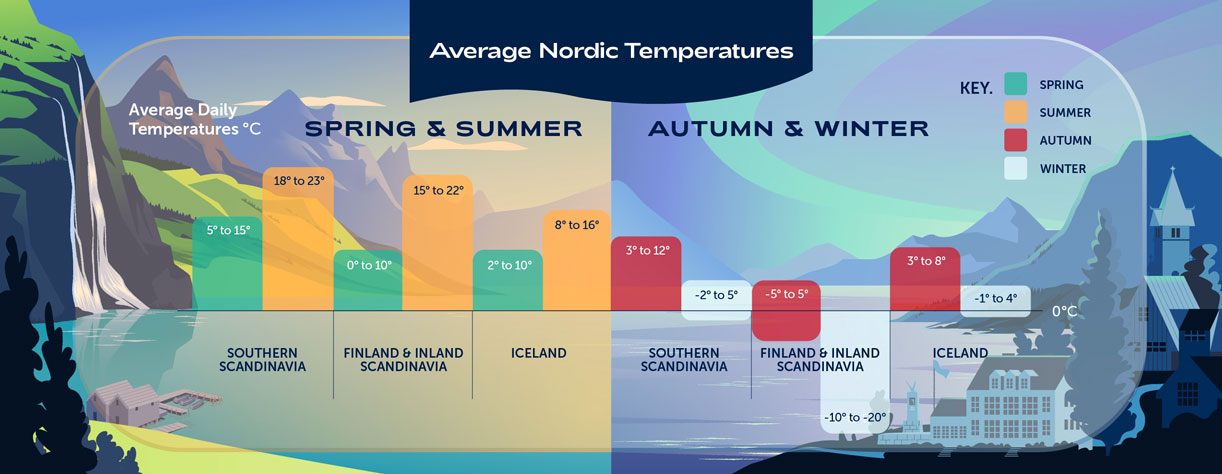
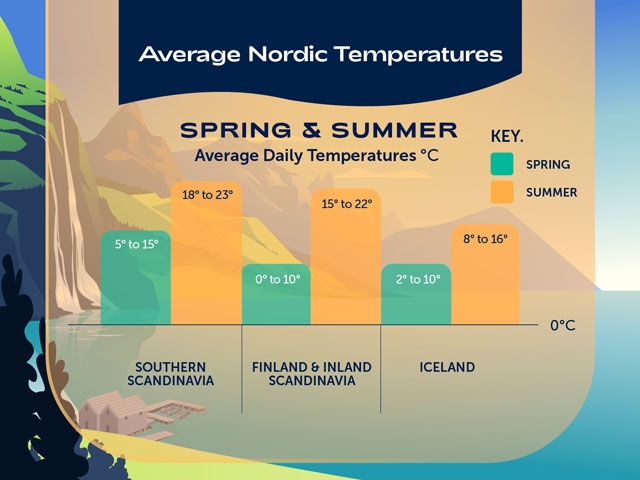
| Southern Scandinavia | approx 5–15°C |
| Finland and northern areas | approx 0–10°C |
| Iceland | approx 2–10°C |
Spring - March to May
- Spring is a gentle transition into warmer days, although the weather can change quickly
- Expect cool mornings, milder afternoons, occasional rain and some lingering snow further north
- Daylight increases noticeably through April and May
Typical temperatures
| Southern Scandinavia | approx 5–15°C |
| Finland and northern areas | approx 0–10°C |
| Iceland | approx 2–10°C |
Summer – June to August
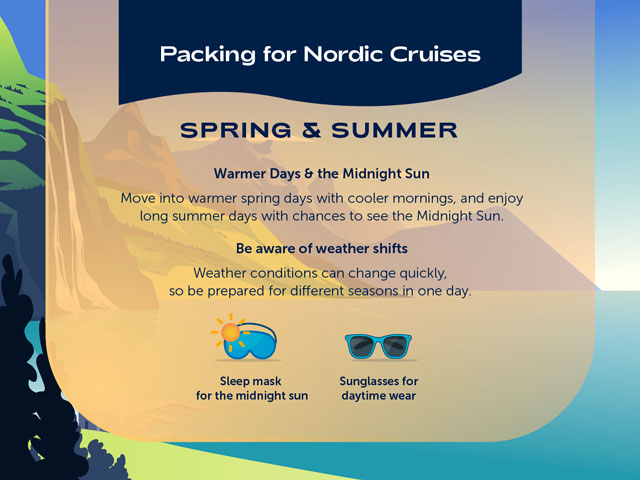
- Summer is the warmest time of year, with long, bright days and, in the far north, you can experience the Midnight Sun
- Days are generally mild and pleasant, with the chance of rain and cooler evenings near the coast
- Daylight is at its longest, especially above the Arctic Circle
Typical temperatures
|
Denmark and southern Sweden/Norway |
approx 18–23°C |
| Finland and inland regions | approx 15–22°C |
| Iceland |
approx 8–16°C |
Summer – June to August
- Summer is the warmest time of year, with long, bright days and, in the far north, you can experience the Midnight Sun
- Days are generally mild and pleasant, with the chance of rain and cooler evenings near the coast
- Daylight is at its longest, especially above the Arctic Circle
Typical temperatures
|
Denmark and southern Sweden/Norway |
approx 18–23°C |
| Finland and inland regions | approx 15–22°C |
| Iceland |
approx 8–16°C |
Autumn - September to November
- Autumn brings a steady shift towards cooler weather
- You can expect increased rainfall, brisker winds and the first frosts in northern areas
- Daylight reduces quickly from October
Typical temperatures
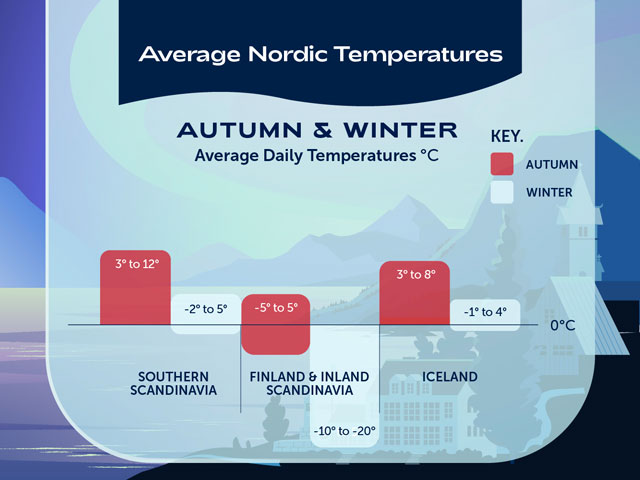
| Early autumn | approx 8–15°C |
| Late autumn | approx -5–8°C |
Autumn - September to November
- Autumn brings a steady shift towards cooler weather
- You can expect increased rainfall, brisker winds and the first frosts in northern areas
- Daylight reduces quickly from October
Typical temperatures
| Early autumn | approx 8–15°C |
| Late autumn | approx -5–8°C |
Winter – December to February
- Winter is cold, snowy and the ideal season for those hoping to see the Northern Lights
- Snow and ice are common, especially inland
- Coastal areas can experience stronger winds
- Daylight is short, with polar night conditions in far northern regions
Typical temperatures
| Southern Scandinavia | approx -2–5°C |
| Finland and inland regions | approx -10– -20°C |
| Iceland | approx -1–4°C |
Winter – December to February
- Winter is cold, snowy and the ideal season for those hoping to see the Northern Lights
- Snow and ice are common, especially inland
- Coastal areas can experience stronger winds
- Daylight is short, with polar night conditions in far northern regions
Typical temperatures
| Southern Scandinavia | approx -2–5°C |
| Finland and inland regions | approx -10 – -20°C |
| Iceland | approx -1–4°C |
What to pack
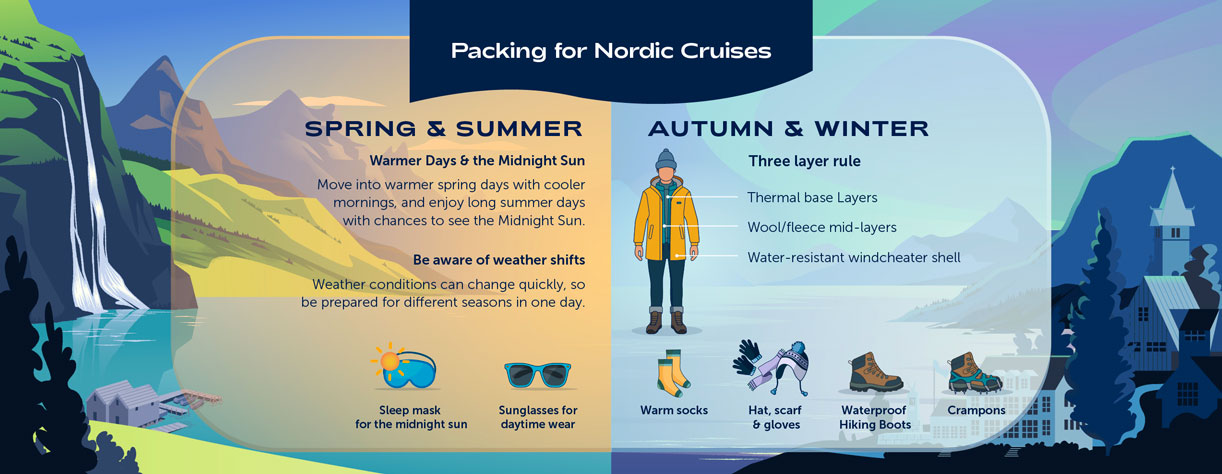
Clothing that works well in every season includes light base layers made from breathable fabrics or merino wool, a warm mid‑layer such as fleece or light down, and a waterproof, windproof jacket. Comfortable, water‑resistant walking shoes are helpful for time ashore, and a set of smart‑casual clothing is ideal for relaxed evenings on board.
Spring and Autumn
- A medium‑weight jumper or insulated jacket
- Waterproof trousers
- A scarf and light gloves
- A compact waterproof layer or umbrella
Summer
- A light jacket or jumper for cooler evenings
- T‑shirts and breathable tops
- Shorts or light trousers
- Sunglasses and sun protection
- Swimwear for pools, saunas or coastal dips
- A sleep mask, especially useful during the Midnight Sun
Winter
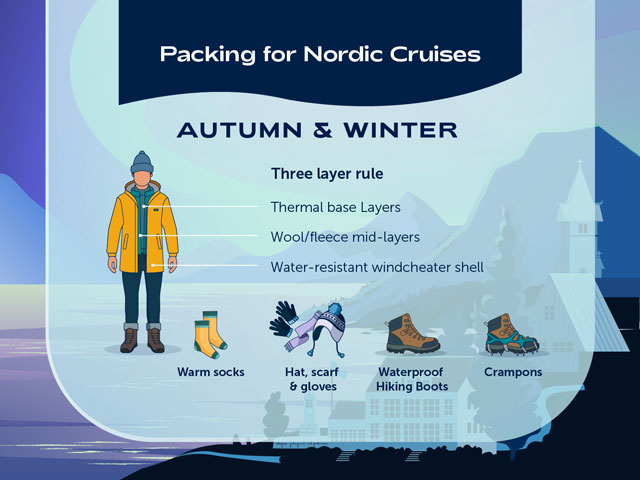
- Thermal base layers
- A heavy insulated coat
- A wool hat, scarf and insulated gloves
- Waterproof winter boots with good grip
- Thick wool socks
- Optional ice grips for particularly icy towns
A few helpful additions
Helpful Extras
- A comfortable daypack for time ashore
- A reusable water bottle
- A power bank – batteries can drain faster in cold weather
- A camera or small tripod for night skies and landscapes
- A travel adaptor (Type C/F plugs)
- Moisturiser and lip balm to protect against dry air
Practical Tips
Weather in the Nordics can shift quickly, even in summer, so layering is the best way to stay comfortable. Many towns are easy to explore on foot, but surfaces can be wet or icy, so well‑gripped footwear is helpful.
Toiletries and Health
- High‑factor sunscreen, especially from spring to early autumn
- After‑sun or moisturiser
- Lip balm with SPF
- Personal medications
- Basic first‑aid items such as plasters and pain relief