

Atlantic Island Cruises
The Atlantic Islands stretch south from the coast of Europe in a loose arc, Portugal's Azores and Madeira, the Canary Islands off the African coast, the Cape Verde archipelago further south still, and a single cruise can take in several of them in a way that no other form of travel really matches. [ReadMoreMob][ReadMoreDesk]
Fred. Olsen's Atlantic island cruises sail from UK ports, heading out into the open ocean and calling at some of the most geographically distinct places in this part of the world. The islands vary enormously, volcanic peaks and black sand beaches in the Canaries, lush green calderas in the Azores, terracotta-coloured towns in Cape Verde, historic harbour cities in mainland Portugal. What they share is that they're all best approached from the sea.
Why Choose an Atlantic Islands Cruise?
The Atlantic Islands are spread across a large stretch of open ocean, which makes them genuinely difficult to explore any other way. [ReadMoreMob][ReadMoreDesk]Flying between islands involves multiple connections, long layovers and the kind of logistics that quickly eat into the time you actually have. Cruising removes all of that, you sail overnight, wake up in a new port, and spend your day ashore rather than in transit.
There's also something about the scale and the light out here that feels different from Mediterranean or northern European sailing. The Atlantic has a particular quality, bigger skies, deeper water, and a sense that you're genuinely out in the ocean rather than hugging a coastline. Fred. Olsen's smaller ships suit this kind of voyage well. They move through the water quietly, berth in harbours that larger vessels can't access, and carry enough guests to feel social without ever feeling crowded.
For those travelling from the UK, the journey south is part of the experience. Watching the weather change as you move from the Bay of Biscay towards warmer latitudes is one of those small pleasures that stays with you.
Atlantic Island Cruises from the UK
Destination on an Atlantic Island Cruise
Depending on your itinerary, your Atlantic island cruise may include some or all of the following destinations. Each brings something different to the voyage.
Portugal
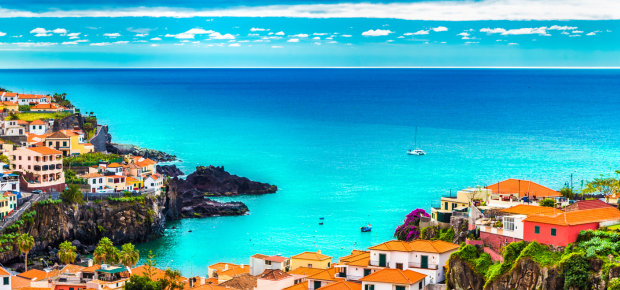
Portugal features on many Atlantic island cruises both as a departure point and a destination in its own right. Lisbon sits at the mouth of the Tagus, with its tiled facades, hilltop viewpoints and one of Europe's great seafood-eating cultures. Porto, further north, is a smaller, grittier city built around the Douro river and the port wine lodges of Vila Nova de Gaia across the water.[ReadMoreMob][ReadMoreDesk]
Beyond the mainland, the Azores are one of the most distinctive island groups in the Atlantic, nine volcanic islands sitting in the middle of the ocean, roughly 1,500 kilometres west of Lisbon. Ponta Delgada on São Miguel is the main port of call, and the island offers crater lakes, hot springs and walking trails through landscapes that genuinely don't look like anywhere else in Europe. Madeira, further south, is greener and steeper, with levada walks, the mountain town of Monte above Funchal, and a slower pace of life that rewards more than a single visit.
The Canary Islands
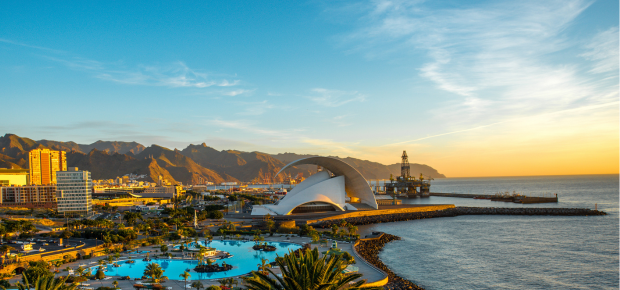
The Canary Islands sit just off the coast of northwest Africa, close enough to the continent to feel its influence, but very much their own place. The archipelago covers a wide range of landscapes, Gran Canaria has dune systems and historic colonial architecture in Las Palmas; Tenerife has the volcanic peak of Mount Teide at its centre; Lanzarote has the black lava fields and otherworldly terrain of Timanfaya National Park. [ReadMoreMob][ReadMoreDesk]
The quieter islands are worth seeking out. La Palma is one of the least developed in the group, with dark-sky reserves and ancient laurel forests. El Hierro, the smallest and most westerly, has a quality of stillness that's hard to find anywhere closer to home. Fuerteventura has long, wind-blown beaches and a more open, desert-like feel. Fred. Olsen has a long history of sailing to the Canaries, it's been a core part of our programme for decades, and the familiarity shows in the ports we use and the time we spend in each one.
Spain
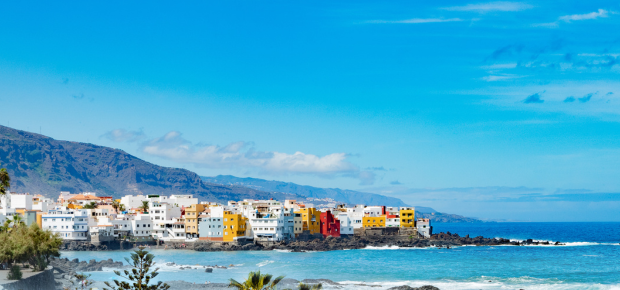
Mainland Spain features on many Atlantic island cruise itineraries, typically as a port of call on the way south or north. The Galician ports, Vigo, La Coruña, Vilagarcía de Arousa, sit on the Atlantic coast and have a distinctly different character from the Mediterranean south. The coastline here is green and deeply indented, the seafood is outstanding, and Santiago de Compostela is within reach for those who want to visit one of the great pilgrimage cities of Europe. [ReadMoreMob][ReadMoreDesk]
Cádiz appears on southern itineraries, bridging mainland Spain and the islands. It's a natural stopping point, ancient, Atlantic-facing and well-placed for exploring Andalusia or simply spending a morning wandering the old town before the ship heads further south. Some voyages also pass through the Strait of Gibraltar, which is a moment in itself, the point where the Atlantic meets the Mediterranean, with Africa visible to the south and Europe to the north.
Cape Verde
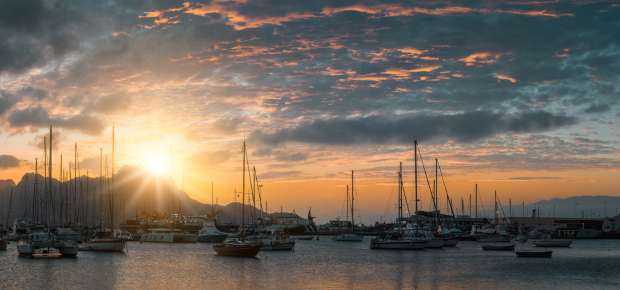
Cape Verde sits around 570 kilometres off the west coast of Africa and is the southernmost point on most Atlantic island cruise itineraries. The archipelago is made up of ten main islands, each with its own character, though Mindelo on São Vicente and Praia on Santiago are the most common ports of call. [ReadMoreMob][ReadMoreDesk]
Mindelo is the cultural capital, a small, vivid city with a strong musical tradition rooted in morna, the melancholic folk music that Cape Verde is known for. The bay it sits in is one of the finest natural harbours in the Atlantic, and the town's Portuguese colonial architecture gives it a faded, characterful quality that's easy to spend a full day in. The climate is warm and dry year-round, the pace is unhurried, and the light in the late afternoon is worth the journey on its own.
What to Expect on an Atlantic Islands Cruise
Atlantic island cruises from the UK tend to be longer than many other itineraries, typically ten nights or more, because of the distances involved. That's not a disadvantage. The days at sea are one of the things guests most often mention when they return. The Atlantic has space and rhythm to it, and time on deck watching the ocean is genuinely restorative in a way that a full schedule of port days isn't always.
Fred. Olsen's ships are well set up for longer ocean passages. There are multiple restaurants and bars, deck spaces for different moods, lively or quiet, covered or open, and an evening programme of entertainment and talks that tends to reflect where you're going. Lectures on the geology of the Canaries, the history of the Portuguese spice routes, or the music of Cape Verde are the kind of thing you'll find on board, alongside the more straightforward pleasures of good food, sea air and not looking at a screen.
Shore tours are available at every port, ranging from walking tours of historic centres to whale watching off Tenerife or jeep safaris across the volcanic interior of Lanzarote. You're equally welcome to go ashore independently; the ports are generally easy to navigate on foot, and the ships give you enough time in each place to explore at your own pace.
When to Cruise to the Atlantic Islands
One of the practical strengths of an Atlantic islands cruise is the timing. The Canary Islands and Cape Verde are warm year-round, reliably so in winter, when much of northern Europe is cold and grey. This makes Atlantic island cruises one of the most popular choices for winter sun departures, and Fred. Olsen runs sailings throughout the autumn and winter months to meet that demand.
Autumn departures from the UK, typically October to December, catch the end of the European summer and the beginning of the warmer Atlantic season. Temperatures in the Canaries in November are typically in the low-to-mid twenties, and Cape Verde is warm and largely dry throughout the year.
Spring sailings have their own appeal. Madeira and the Azores are particularly good in March and April, when the flora is at its most vivid and the walking conditions are excellent. Portugal's mainland is at its most comfortable in spring too, warm but not relentlessly hot, and noticeably quieter than the summer months.
Summer is less typical for Atlantic island itineraries, though some voyages do run then, particularly those combining Spain and Portugal with a Canary Islands extension.
FAQs about Atlantic Island cruises
What are the Atlantic Islands?
The Atlantic Islands generally refers to the island groups sitting in the eastern Atlantic Ocean, most commonly the Azores and Madeira (both Portuguese), the Canary Islands (Spanish), and the Cape Verde archipelago (an independent nation off the west African coast). Some itineraries also include stops on mainland Portugal and Spain as part of a wider Atlantic voyage.
Which destinations are included on an Atlantic islands cruise?
Fred. Olsen's Atlantic island cruises may include Portugal (Lisbon, Porto, Madeira, the Azores), the Canary Islands (Gran Canaria, Tenerife, Lanzarote, La Palma, Fuerteventura, El Hierro and others), mainland Spain and Cape Verde. The specific ports on each sailing vary by itinerary, the cruise listings on this page show exactly what's included on each departure.
How long are Atlantic island cruises?
Most Atlantic island cruises with Fred. Olsen run between ten and twenty-one nights, though grand voyage itineraries can be longer. The duration reflects the distances involved, the islands are spread across a wide stretch of ocean, and longer sailings allow you to cover more of them without feeling rushed in any one place. Shorter departures focusing on the Canaries or Madeira alone are also available.
Can I cruise to the Atlantic Islands from the UK?
Yes — Fred. Olsen's Atlantic island cruises depart from UK ports including Southampton and Liverpool, so no flights are needed to join the ship. Sailing from the UK means you have time to settle into the voyage before reaching the first island port, typically two to three days into the journey depending on the itinerary.
Are Atlantic island cruises good for winter sun?
The Canary Islands and Cape Verde are among the most reliable winter sun destinations accessible from the UK, with temperatures typically between 20 and 25 degrees Celsius from October through to March. An Atlantic islands cruise in winter gives you warmth, daylight and a change of scenery at a time of year when most European destinations are closed or cold. It's one of the most practical reasons people choose this itinerary, and one of the most popular on the Fred. Olsen programme.