


In this article, we will take a deep dive into one of Europe’s most dramatic landscapes, the Norwegian Fjords, and share the best time of year to enjoy a Norwegian Fjords cruise based on the weather.
If you’re planning to visit Norway, it can be hard to know what sort of weather to expect, especially as it can differ drastically from the north to the south. Knowing the weather conditions can help you determine the best time of year to book your 2026 cruise, as well as the best time for wildlife watching and outdoor activities.
Keep reading to find out more about the best time of year to visit the Norwegian Fjords.
Spring Weather in the Norwegian Fjords (March–May)
- Average temperatures: 4°C to 11°C
- Expected weather: Changeable, with light snow and rain to bright days.
- Best for: Quieter ports and blooming flora.
Spring in the Norwegian Fjords runs between March and May and brings a gentle mix of crisp air, longer days, and landscapes slowly waking from their winter slumbers.
Average temperatures in spring typically range from 4°C to 11°C as snow begins to melt and the travel season builds. Although the temperatures are mild, the weather can be changeable, so expect anything from light snowfalls and occasional rain to clear, bright days. Spring brings the beginning of a new seasonal year when waterfalls surge at their strongest and fruit orchards begin to blossom along fjord valleys.
If you’re considering cruising in the spring, you’ll be greeted by scenery at its freshest and most dramatic, with quieter ports before peak summer crowds. Melting snow feeds powerful waterfalls, wildlife becomes more active, and the fjords feel peaceful and pristine. Spring offers that perfect blend of early‑season tranquillity and spectacular natural renewal, an atmospheric backdrop that makes cruising these waters especially memorable.
Best fjords to visit in spring
Hardangerfjord (southwest Norway)
Hardangerfjord, located in southwest Norway, is a colourful display of fruit blossoms between April and May, when the trees awaken from their sleep, creating incredible scenery. Hardangerfjord is also known as an ideal location for gentle outdoor activities, even in milder conditions, making the spring months the best time.
Sognefjord (western Norway)
Sognefjord in western Norway is a beautifully contrasting location in the spring months, as the blue water and snowy summits stand in juxtaposition. As nature wakes, so do the lush valleys, vibrant blossoms, and crisp, fresh air.
Oslofjord (southern Norway)
Comparatively, Oslofjord in southern Norway is warmer than other fjords in the north, making it great for those looking to enjoy city-plus-fjord itineraries. Longer, brighter days and fewer crowds often attract travellers to its shores in the spring months.
READ MORE: When is the best time to visit Norway?
Summer Weather in the Norwegian Fjords (June–August)
- Average temperature: 15°C and 20°C
- Expected weather: Long, bright days and warm sun
- Best for: Midnight sun viewing, outdoor activities and warmer temperatures
Norwegian Fjords weather in the summer is dramatic yet beautiful. Temperatures sit between 15°C and 20°C, and days stretch late into the evening. The further north you go, you’ll edge closer to the midnight sun, an arctic spectacle that has to be experienced when in Norway.
The summer months are some of the best for outdoor activities. Whether you’re looking to take to the water kayaking or canoeing, climb the fjords on an outdoor hike or go wildlife watching, between June and August are ideal times.
Whilst the summer months are often more stable weather-wise than other seasons, fjord regions can still experience sudden weather shifts, so being prepared for all eventualities is always advised.
Best fjords to visit in summer
Geirangerfjord (western Norway)
The summer months bring abundant and full waterfalls as the snow and ice melt, so what better time to head to the Geirangerfjord in western Norway? The summer sunshine offers glistening vistas from viewpoints like Flydalsjuvet.
Tromsø region fjords (Arctic Circle area)
From late May to late July, the sun doesn’t set in Tromsø, which creates long golden hours that make fjord landscapes glow. The landscapes are vibrant in the summer light, and the calm waters make summer ideal for scenic fjord cruises, midnight hikes, and photography.
Lysefjord (southwest Norway)
Summer brings Lysefjord its mildest temperatures, typically ranging between 15°C and 25°C, creating ideal conditions for hiking, cruising, and sightseeing. The summer months bring the best weather for visiting Pulpit Rock.
Autumn Weather in the Norwegian Fjords (September–November)
- Average temperature: 10°C to 15°C
- Expected weather: Changing, with sunny days and wet, windy spells
- Best for: Dramatic scenery and photography opportunities
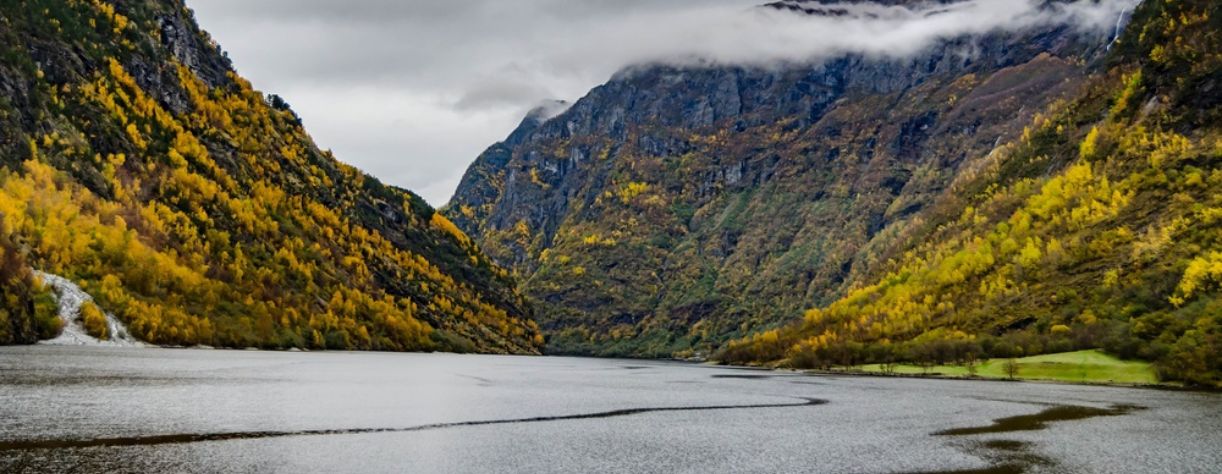
Autumn in the Norwegian Fjords is the season of change, as it shifts from long, lingering nights in September to crisp, cosy November nights. Daytime temperatures range from 10°C to 15°C, making it comfortable and pleasant for those who still want to explore the flora, fauna, and golden, glowing landscapes. The fjords are at their most atmospheric in autumn, with contrasts between dark cliffs, deep water, and vibrant foliage. October especially delivers the most dazzling colour displays across lowland and fjord landscapes.
The flow of the Gulf Stream keeps temperatures mild in the coastal fjords, but late autumn can bring early snowfall at mountain peaks. Even with shorter days, the light is still great for photography, so make the most of this outstanding opportunity.
Best fjords to visit in autumn
Nærøyfjord (western Norway)
UNESCO-listed Nærøyfjord in western Norway blooms in beautiful autumn colours between September and November, and its near-vertical cliffs, narrow waterways, waterfalls, and tiny mountainside farms make it feel even more dramatic.
Nærøyfjord is narrower than most fjords and only accessible on smaller cruise ships, so visiting in the autumn months will mean even fewer crowds than more-travelled fjords. Take to the calm and uncrowded waters in a canoe or kayak and experience the beauty from the water’s edge.
Hardangerfjord
Hardangerfjord is also known as Norway’s famous orchard fjord, and the later months bring golden birch forests, warm-hued hillsides, and vibrant fruit orchards at harvest time. Hardanger is Norway’s cider capital, and visitors can enjoy farm cider tastings, orchard visits, and local food experiences.
Winter Weather in the Norwegian Fjords (December–February)
- Average temperature: 0°C
- Expected weather: Snow flurries and short, dark days
- Best for: Northern Lights viewing
Winter is when the Norwegian Fjords turn into a snow-capped winter wonderland, with crowds thinning and temperatures hovering around 0 °C.
Daylight hours thin to 5 to 6 hours in December around the fjords, with days even shorter the further north you go. Snow, however, reflects what little light there is, creating a soft, luminous winter glow.
Talking of light, the winter months are some of the very best to witness the Northern Lights, with the long dark nights and crisp air providing the perfect conditions, so on your next Northern Lights cruise, keep your eyes to the skies to see if you can catch a glimpse of the dancing green hues.
READ MORE: Why you should cruise Norway in winter
Best fjords to visit in winter
Alta and northern fjords
Alta is one of the best places in Norway for aurora sightings and peaceful winter cruising. Located far above the Arctic Circle, the town is known for its long, dark and dry winter nights, which create excellent aurora visibility.
Tromsø region fjords
Tromsø sits directly beneath the Aurora Oval and in the winter months, when the skies come to life. Due to the Gulf Stream, Tromsø has a much milder winter climate than other destinations at the same latitude, with temperatures around -4°C.
No matter when you choose to visit Norway on a Norwegian Fjords cruise, it offers something extraordinary in every season. Understanding the weather across these changing seasons will help you choose the perfect time for your 2026 cruise, whether that is peaceful exploration, thrilling scenery, or once‑in‑a‑lifetime natural spectacles.
Frequently Asked Questions
What is the best month to visit the Norwegian Fjords?
The best month for you to visit the Norwegian Fjords depends on what you're seeking. Typically, however, June and July are considered two of the best months to visit due to their stable weather conditions.
Do the Norwegian Fjords get snow in winter?
Yes, the Norwegian Fjords can get snow from late autumn and throughout winter, with the northern regions seeing heavier flurries.
What is the weather like above the Arctic Circle in summer?
Summer above the Arctic Circle brings 24-hour daylight, with the sun staying above the horizon from roughly mid‑May to late July. Temperatures often sit below 10°C in this region during the summer.
Can you see the Northern Lights from the fjords?
Yes, depending on where you are in Norway, you might be able to see the Northern Lights from the fjords. The further north you are and the clearer the conditions, the more likely you are to see the dancing lights.
Which fjords are warmest during the summer months?
Some of the warmest fjords during the summer months include Oslofjord, Lysefjord and Hardangerfjord.