


In this article, discover what makes the Norwegian fjords so rich in wildlife, from nutrient-filled waters and seabird cliffs to the marine habitats that support seals, porpoises and whales. We explore practical tips for wildlife spotting from the deck, including what to bring, where to stand on board, how to read surfacing cues and what species you may be able to identify, from white-tailed eagles and puffins to minke whales and harbour seals.
This guide also covers responsible wildlife viewing, seasonal spotting considerations, onboard enrichment opportunities and answers common questions about what you might see on a Norwegian fjords cruise.
Why the Norwegian fjords are so rich in wildlife
The wildlife in the Norwegian fjords begins with the fjords themselves. These steep-sided landscapes create sheltered waterways where marine life can thrive, and the nutrient-rich waters support fish populations, which in turn attract seabirds, seals, porpoises and occasionally whales.
Along the cliffs, seabird activity can be constant with birds rafting on the water, circling overhead or moving low across the surface in feeding lines.
These fjords also make wildlife spotting from the deck unusually rewarding. Unlike some wildlife experiences that depend on excursions ashore, sightings can happen while scenery slips past. Calm conditions can make surface activity easier to notice, too: a telltale blow, a flicker of dorsal fin, a seal lifting its head in a sheltered inlet.
READ MORE: The Nordics: A Year-Round Weather and Packing Guide
Your deck-side spotting toolkit
The essentials
A pair of binoculars can make all the difference when trying to spot wildlife, as a wide field of view often matters more than extreme magnification, helping you track movement rather than chase it.
A camera or phone with zoom can be surprisingly effective, and using burst mode can help to capture quick wildlife moments.
How to spot more, without trying too hard
A good start is to scan near cliff ledges first, then along the waterline, then out towards the water.
Watch for “tells”, such as birds suddenly circling over one patch of water, which may signal fish activity. A smooth dark roll may reveal a minke whale, and small, repeated arcs could point to a harbour porpoise.
Early morning and dusk can be rewarding times for viewing, though bright daytime conditions can be excellent too, especially when the water is calm and reflective.
Bringing along binoculars can add another layer to the experience, whether scanning from the rail or lingering over a promising stretch of coast.
Quick deck checklist
- Choose a good position on deck where you have a good view
- Check for glare when taking a photo and take note of the sun's position
- Scan the cliffs for birds
- Watch for feeding birds on the water
- Look for smooth, dark backs in deeper water
Sometimes the best wildlife moments begin with simply standing still and watching well.
Wildlife you may see in the Norwegian Fjords
White-tailed eagle (sea eagle)
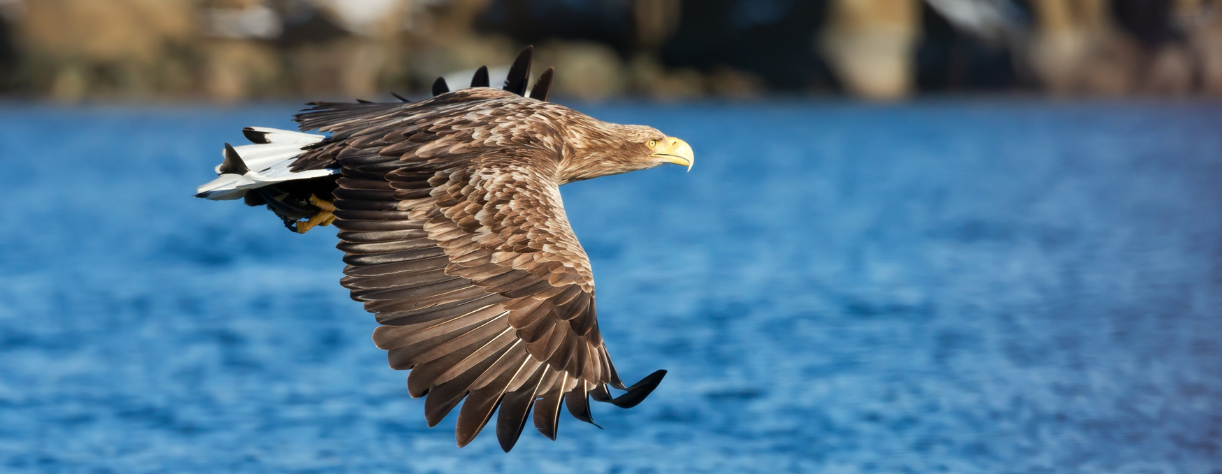
One of the most memorable sights in Norwegian fjord wildlife is the white-tailed eagle, often known as the ‘sea eagle’. These birds may be seen flying on the wind beside the cliff edge or circling above headlands, their broad wings held steady in flight, making them easy to identify.
As Norway holds Europe's largest population of White-tailed Eagles, you should be able to spot one over wider fjord mouths where open water meets the coast.
Puffins and other seabirds
Atlantic puffins may sometimes be seen around coastal outcrops, depending on the route and time of year, often skimming low across the water with quick, busy wingbeats. Cliff ledges and offshore stacks can also support seabirds such as guillemots, razorbills, kittiwakes and, in some areas, gannets. One of the best clues to watch for is feeding activity; when birds begin gathering and diving in one area, it can be worth lingering there a little longer.
A few useful spotting tips:
- Cliff faces are a good place to start, especially when viewed through binoculars, as birds can be easy to miss at a distance.
- Low, purposeful flights across the water often signal feeding behaviour rather than simple movement.
- When feeding is happening, it’s usually worth lingering a little longer, as other marine life may not be far away.
Marine mammals − whales, porpoises and seals
Minke whales
Minke whales can be easy to miss at first, as their movements are incredibly subtle. However, you may be able to catch its back breaking the surface of the water, sometimes followed by a small curved dorsal fin, rather than the kind of breach people often associate with whales.
Their blows can be brief, so it often helps to watch for small changes on the water’s surface as much as the animal itself. Deeper channels and wider stretches of water, particularly where there is visible fish activity, can warrant extra attention.
Harbour porpoise
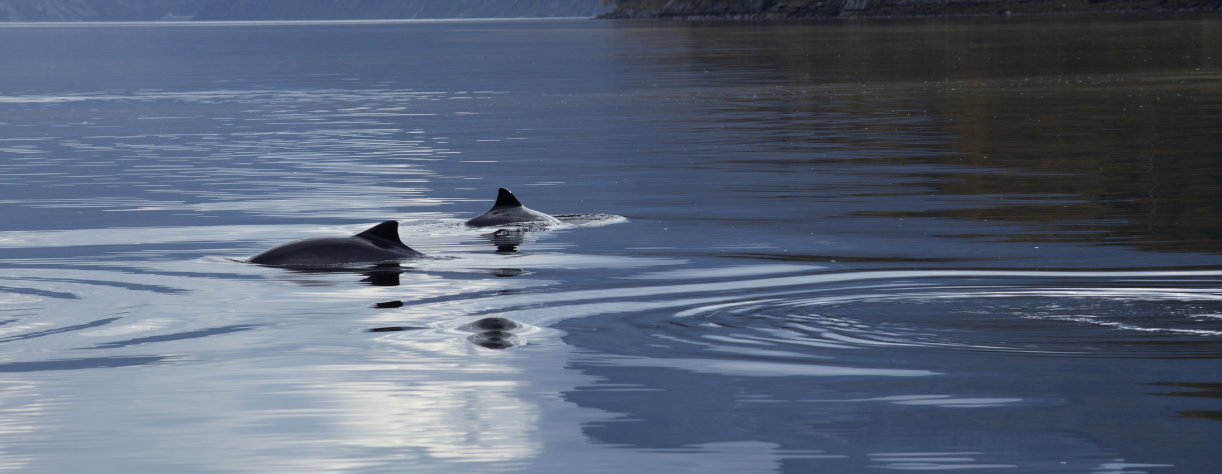
Harbour porpoises can be surprisingly easy to overlook, as they tend to surface quietly. You may notice a series of small arcs or a modest triangular fin appearing briefly.
It can help to scan ahead of the ship rather than only alongside it, as porpoises are often first noticed further forward in the water.
Seals along the shoreline
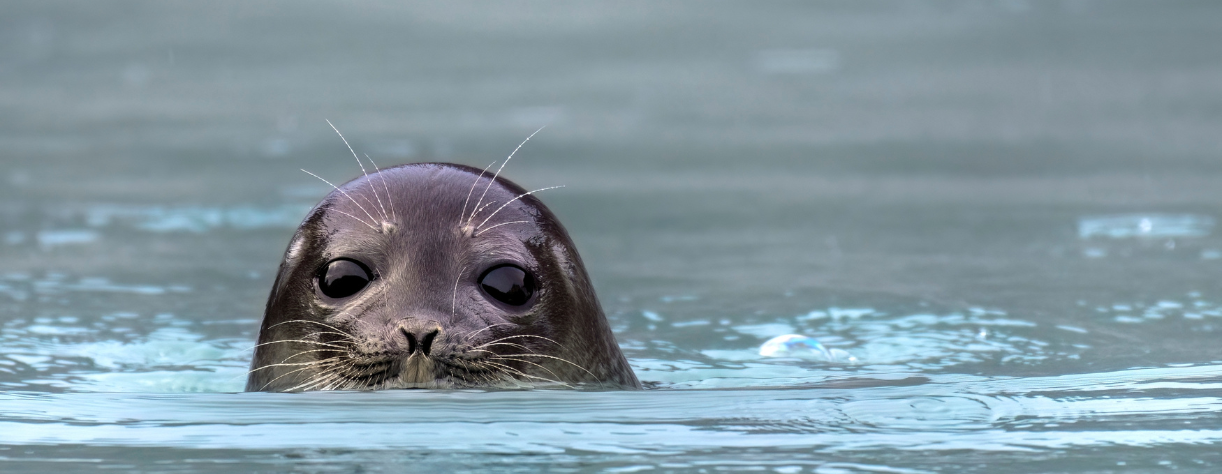
Harbour seals are sometimes spotted lying out on low rocks or with just a head visible in sheltered water near shore. Around the edges of the water, they can blend so well into the landscape that they can look like driftwood at first glance, and it is often only after watching for a moment that the shape resolves into a seal.
Occasional visitors
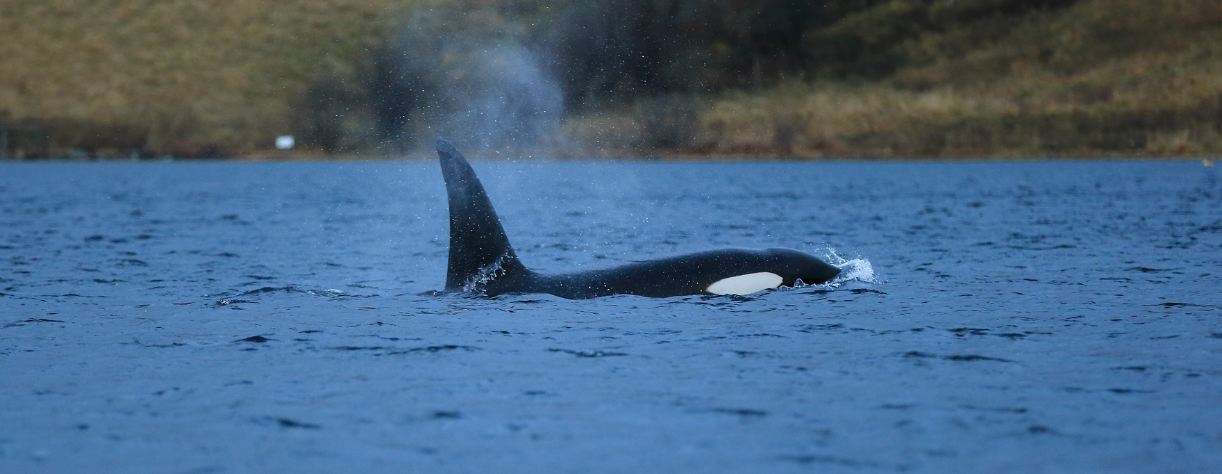
Orca, or killer whales, are sometimes seen in Norwegian waters, though sightings are always a possibility rather than an expectation, so you are incredibly lucky if you get to spot one.
If they do appear, they are best observed quietly and from a respectful distance. Keeping as quiet as possible and avoiding disturbance helps protect the encounter and let everyone enjoy it.
A simple “what am I looking at?” guide
If it’s soaring above cliffs…
It may be a white-tailed eagle or a large gull, just check the wing shape and whether the flight feels powerful and gliding rather than restless.
If the water suddenly sparkles with movement…
It may be feeding fish with seabirds overhead. Keep scanning nearby for minke whale surfacing.
If you see small, repeated arcs…
It may be a harbour porpoise; watch the same patch of water for a minute before looking away, as they can be rather elusive.
If something is out on the rocks…
It may be a harbour seal, so to spot one, look for a still torpedo-like shape and the occasional movement of a head.
Make the most of onboard expertise
If you enjoy learning as you travel, wildlife spotting often deepens through shared knowledge.
Destination talks, classes and workshops can add fascinating context to what you may see from the deck, from fjord ecosystems to seabird behaviour. Crew knowledge can be invaluable, too; sometimes simply asking where recent sightings have been can transform a quiet stretch of sailing.
There is also something about unhurried deck time on a smaller, friendlier ship that lends itself to noticing more.
Plan your wildlife moments − a gentle seasonal note
Depending on the cruise route and time of year, the character of wildlife viewing can shift.
Spring and summer bring longer days, offering more time to spot elusive wildlife. However, the golden autumn light can be good for bird spotting.
Whatever the season, calm conditions often make surfacing cues easier to spot when watching for porpoises, seals, or any whale activity.
Key Takeaways
- The Norwegian fjords support wildlife thanks to sheltered waterways, nutrient-rich waters and coastal habitats.
- Wildlife spotting can happen directly from the deck, with cliff ledges, coastal outcrops and calm inlets all worth scanning to see if you can spot any wildlife.
- All you need is a simple spotting toolkit: binoculars, a camera or phone with good zoom, warm layers and a little patience.
- Look for whale blows and surfacing cues, feeding seabirds and repeated surface movement to improve your chances of seeing marine life.
- Species you may spot include white-tailed eagles (sea eagles), Atlantic puffins, harbour seals, harbour porpoises and minke whales, with occasional orca encounters possible.
- Early morning and dusk can be rewarding viewing times, though calm, glassy water and good daylight can improve sightings at any time.
- Move between vantage points on board, reduce glare where possible and make use of outside deck space for wider viewing angles.
- Practise responsible wildlife viewing by observing at a respectful distance and remembering sightings can never be guaranteed.
- On a Norwegian fjords cruise, destination talks, crew insight and unhurried deck time can add depth to the wildlife experience.
- With fjord wildlife, much of the enjoyment comes from learning what to look for and holding onto the possibility of seeing something rare.
Explore The Norwegian Fjords Today
Some of the most memorable moments when cruising through the fjords in Scandinavia can happen during quiet moments. Maybe with an eagle flying in the wind above a cliff, porpoises tracing silver arcs ahead of the bow, a whale surfacing where only ripples seemed to be.
With a few simple spotting habits, a good vantage point and a little patience, wildlife in Norwegian fjords can reveal itself in remarkable ways. Combined with imaginative itineraries, enriching experiences and the perspective offered from elegant smaller ships, wildlife watching becomes woven into the voyage itself.
No matter when you choose to travel on a Norwegian Fjords cruise, there are opportunities to spot wildlife along the way. Knowing what species to look for and where to focus your attention on deck can help you make the most of each day, from seabirds along the cliffs to whales surfacing in deeper channels.
FAQs about wildlife of the Norwegian Fjords
What wildlife can you see on a Norwegian fjords cruise?
Possible sightings can include white-tailed eagles, puffins and other seabirds, harbour seals, harbour porpoises and occasionally minke whales. Some sailings may also bring rarer surprises like orcas. Wildlife is wild, though, and sightings are never guaranteed.
Where is the best place on the ship to spot whales and dolphins in the fjords?
Open deck vantage points with minimal glare will often work the best. Scanning ahead of the ship, watching deeper channels and looking for feeding birds can all help you to spot wildlife.
Can you see puffins in the Norwegian fjords from a cruise ship?
It may be possible on some routes, particularly near coastal ridges and areas with seabirds. However, they are best spotted from May to June when they return to nest.
What is the best time of day for wildlife spotting in the Norwegian fjords?
Early morning and as the sun starts to set can be especially rewarding when spotting wildlife, though calm water and good light can make daytime sightings excellent too.
What should I bring for wildlife spotting from the deck?
Binoculars, a camera, or a phone with a zoom lens, warm layers, and a little patience can go a long way.
Are wildlife sightings guaranteed on a fjord cruise?
No, nature does not work to a schedule. But knowing where to look and what cues to watch often increases your chances of seeing more.