


Updated: March 2026
This guide introduces the most beautiful and iconic Norwegian fjords, from UNESCO treasures like the Geirangerfjord to the mighty Sognefjord, and explains why exploring them on a smaller Fred. Olsen ship offers a more intimate and rewarding cruising experience.
If you're planning a trip to Norway, visiting the fjords should be top of your list. Norway has 29,000km of coastline when you include its fjords (it's estimated that there are anywhere between 1,200 and 1,700 fjords dotted along Norway's coast) - but if you don't include the fjords, there's only around 2,500km of coastline.
What better way to explore them than on a Norwegian fjords cruise specifically designed to help you experience the spectacular scenery of this otherworldly setting?
With their smaller size and thoughtful design, Fred. Olsen’s ships are perfectly suited to navigate narrower, lesser-visited fjords that larger vessels simply cannot reach. This means guests can venture deeper, closer and more intimately into Norway’s most spectacular scenery, experiencing its magic from the best seat in the house.
Here's everything you need to know about Norway's awe-inspiring fjords.
What are fjords?
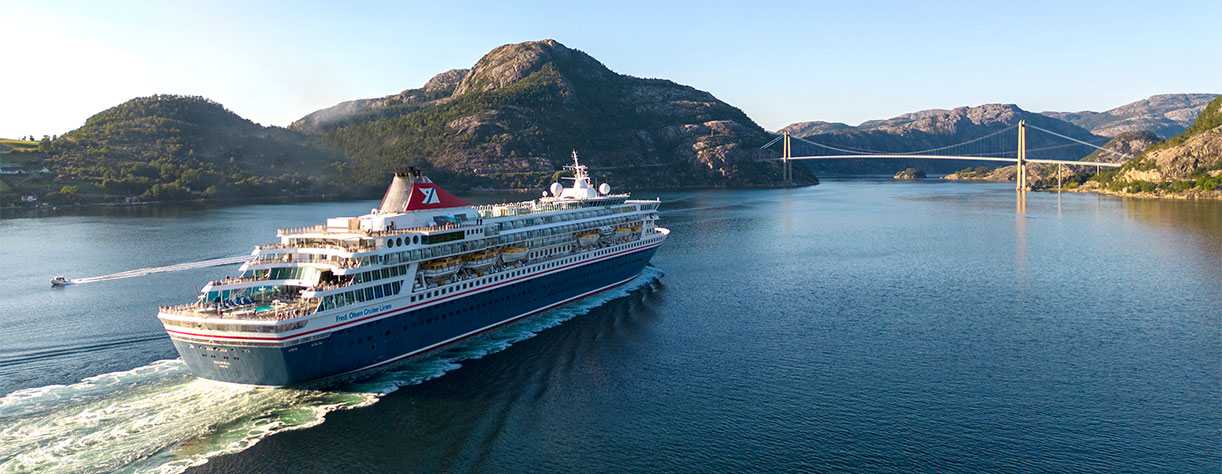
A fjord is a long, narrow body of water, usually found with steep cliffs on both sides of the water. They were created over thousands of years through a process called glaciation, which is when glaciers carve out U-shaped valleys, and seawater fills the space created in the valley floor.
There are fjords all over the world, including in Chile, New Zealand, Canada, Alaska and Greenland, but the most beautiful can be found in Norway. The word "fjord" even has Norwegian roots, stemming from a Viking term with two meanings: "where you travel across" and "ferry".
What makes Norway’s fjords so special?
Norway’s fjords are unlike any other landscapes on Earth, making them some of the world’s most extraordinary cruising destinations, but what makes Norwegian fjords so special?
- Shaped by ice: Norway’s fjords were carved by glaciers over millions of years.
- A landscape found nowhere else: With more than a thousand fjords, Norway has the world’s highest concentration.
- Ever-changing seasons
- Summer: long days, warm weather, lush scenery
- Spring: powerful waterfalls and fresh colours
- Autumn: calm waters and golden hillsides
- Late season: midnight sun in the far north; Northern Lights in northern fjords
How deep are Norwegian fjords?
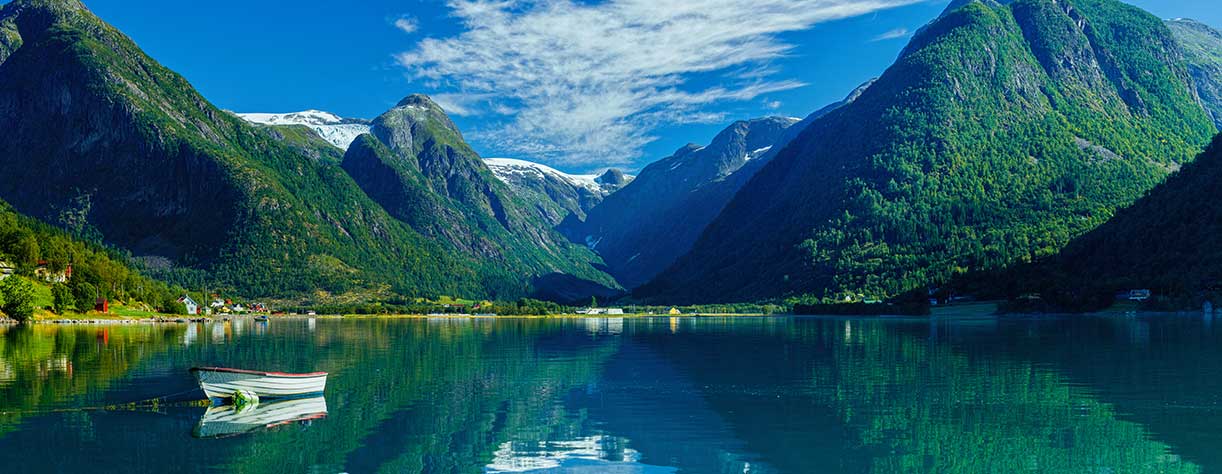
The fjords are incredibly deep, and can reach extreme depths just a few metres from the shoreline. The deepest fjords are up to 6,300 feet (2,000m) deep, with the deepest fjord being Sognefjord, which reaches an incredible 4,291 feet below sea level.
You might also like: A definitive guide to visiting Norway
The best fjords in Norway
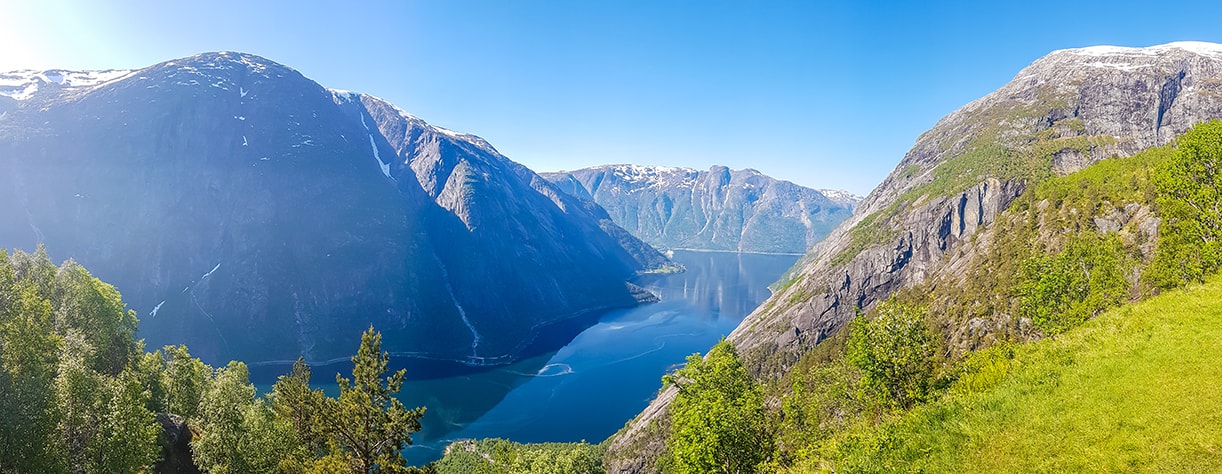
It can be hard to decide where to visit among Norway’s fjords. Many are intertwined, and you can sail on a cruise ship from one to another, which means you can cover plenty of must-see fjords in one trip. Let's have a look at some of the best fjord regions in the country and the varied ways you can explore them.
Sognefjord
Sognefjord is the longest and deepest fjord in Norway. It stretches inland from the coast just north of Bergen for 204km, and you can discover the epic scenery of Norway's coastline from our Fred. Olsen cruise ships.
Often called the King of the Fjords, Sognefjord is also the deepest fjord in the country, reaching a maximum depth of more than 1,300 metres.
You can even explore from dry land on the Flåm Railway. Described as one of the best railway journeys in the world, this incredibly scenic train ride takes you from the Aurlandsfjord, at the end of the Sognefjord, all the way to the Myrdal mountain station, located 867 metres above sea level.
Over the course of an hour-long journey, on the Flåm railway, you'll enjoy the fjords from a different perspective, with a stop at the Kjosfossen waterfall. This incredible waterfall has a total height of 93 metres and is only accessible by train.
You might also like: Sognefjord: The Ultimate Guide
Geirangerfjord
Often described as one of the most scenic fjords in Norway, Geirangerfjord boasts some of the country’s most iconic landscapes. Its extraordinary combination of steep mountains, deep blue water and dramatic waterfalls has earned it prestigious UNESCO World Heritage status.
Geirangerfjord is home to some of Norway’s most recognisable waterfalls, and among the most photographed is the Seven Sisters, which are seven parallel waterfalls cascading down a near‑vertical cliff.
With its calm waters, towering walls and waterfall‑lined shores, Geirangerfjord creates an unforgettable scenic sailing experience. Smaller ships can get closer to waterfalls and navigate deeper into the fjord for uninterrupted views.
Nærøyfjord
A branch of the Sognefjord, Nærøyfjord, is so beautiful that it's a UNESCO World Heritage Site. This fjord is 17km long, but only 250m wide in places, making it one of the most dramatic fjord cruises in the country.
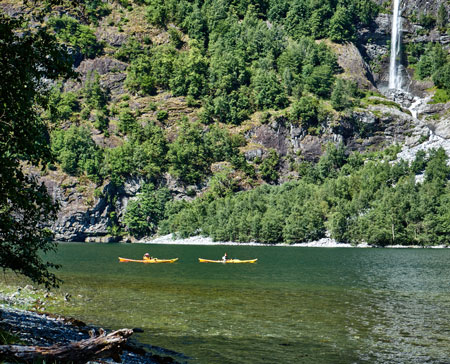
It's a fantastic place to explore on a guided kayak tour, where you'll enjoy getting away from it all and immersing yourself in this beautiful fjord.
Hardangerfjord
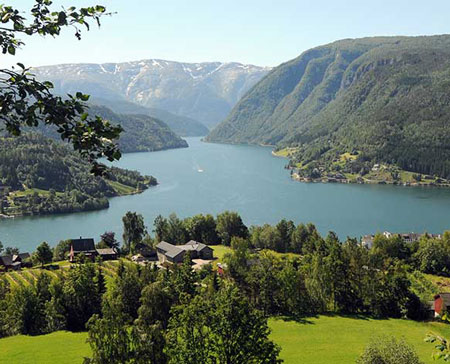
The fifth-longest fjord in Norway, Hardangerfjord, is 179km long. It starts 80km south of Bergen, making the city the perfect base from which to start your exploration of the Hardangerfjord - and there's plenty to explore, including the Sørfjorden, a 38km-long branch of the Hardangerfjord.
As well as experiencing the fjord from the water, there's lots to see and do around the fjord as well, including the Folgefonna glacier and the Folgefonna National Park, located to the west of the fjord.
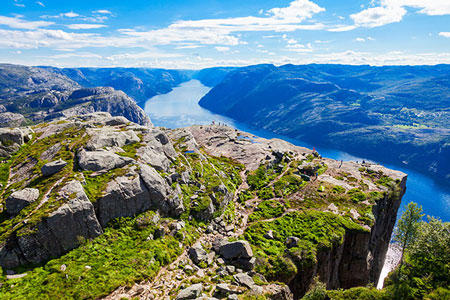
It's also home to the Hardangervidda, a must-visit for keen hikers. This incredible mountain plateau includes Trolltunga, a world-famous mountaineering destination that towers 1,100 metres above sea level. A hike up the Trolltunga is a must-do for any visitor to the fjords - with a cliff jutting out horizontally over the lake below, it's a photo opportunity you can't miss out on!
Lysefjord
Just 25km east of the city of Stavanger in southern Norway, the Lysefjorden is 42km long. As well as exploring the Lysefjord itself, make sure to get up high for incredible scenic views over the water. The Preikestolen - or Pulpit Rock in English - is one of Norway's most famous mountain hikes at 604m high, offering breath-taking views down to the fjord and to the snow-capped mountains beyond.
If you’re keen to explore even further on your cruise of the Lysefjorden, don't miss the Flørli, which, with 4,444 steps, is one of the longest wooden stairways in the world.
Trollfjord
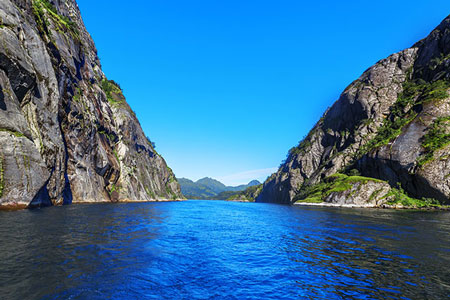
The Trollfjord can be found on the Lofoten Islands, in northern Norway's Arctic Circle. It's just 2km long, and the mouth of the fjord is just 10m wide, making for a jaw-dropping boat trip as you gaze up at the steep mountains and look out for eagles swooping overhead.
This fjord can only be reached via the water (or a gruelling hike), so sit back, relax and enjoy the trip when you visit Arctic Norway.
When is the best time to visit the Norwegian fjords?
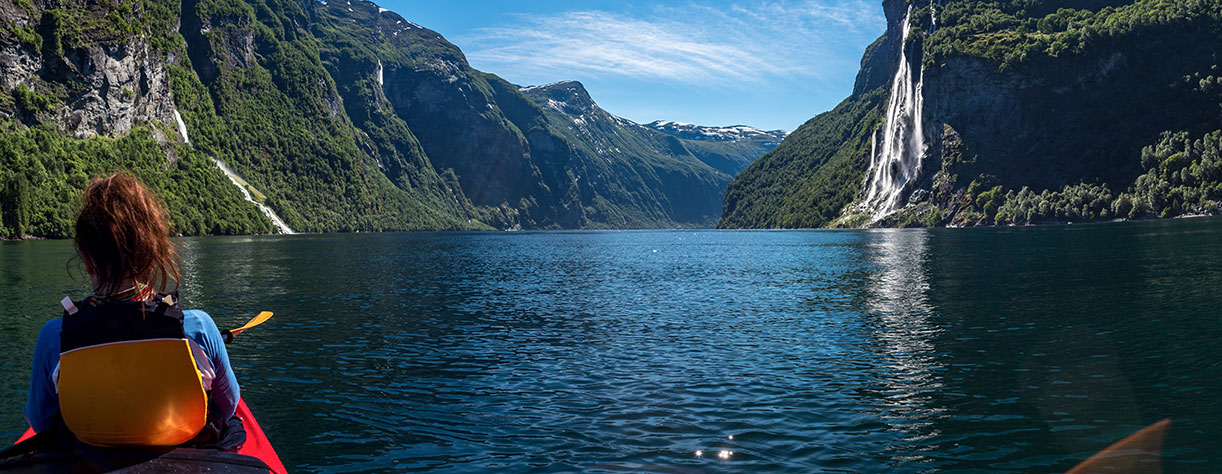
The fjords are fantastic at any time of year. Norway is spectacular in the winter, especially if you travel up to the Arctic Circle, where you might get a glimpse of the Northern Lights.
However, the fjords are also incredible during the summer months, when you can make the most of not only enjoying them on a cruise ship, but also by kayak or on foot as you take on some of the country's best hikes.
You might also like: When is the Best Time to Visit Norway?
What to wear on a Norwegian fjord cruise
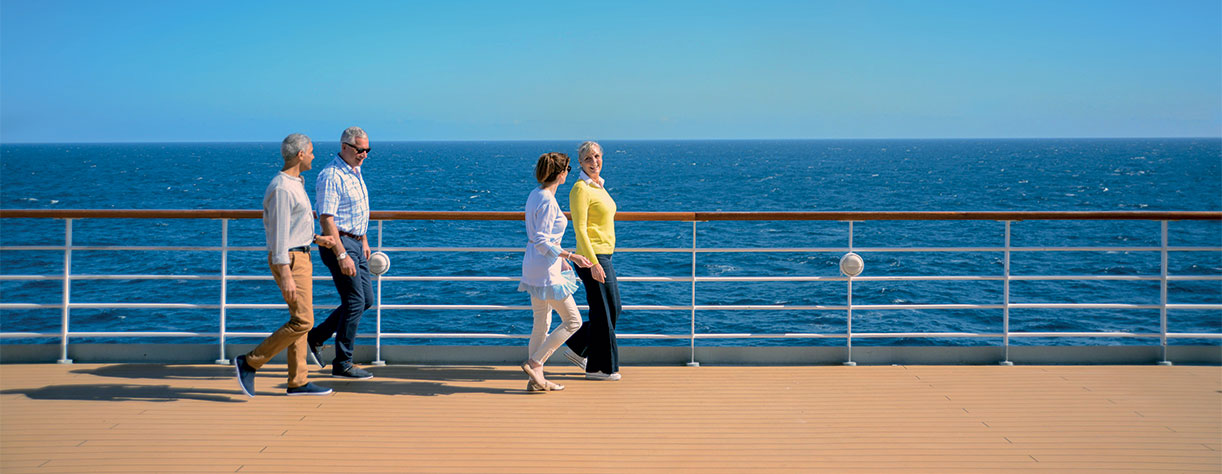
Layering is a good idea for your Norwegian fjord cruise. Whether you're visiting to chase the Northern Lights in winter or planning to supplement your cruise trip with kayaking and walking, Norway's weather can be unpredictable. Be sure to take a light jacket and a waterproof layer, as well as comfortable clothing, to help you make the most of your activities.
Why discover Norway’s fjords on a smaller cruise ship?
There are so many reasons why going on a smaller cruise ship is the best way to see the iconic Norwegian fjords, and here we list some of the main attractions.
- Reach fjords larger ships can’t: Norway’s coastline is full of narrow passages, tight turns and remote inlets that only smaller cruise ships can explore. Fred. Olsen’s smaller ships are designed to sail deeper into these fjords, offering views and experiences unavailable on larger cruise ships.
- Scenic cruising at its best: A Norwegian fjords cruise offers one of the most relaxing and immersive ways to explore towering cliffs, peaceful waters and charming fjordside towns.
- Local expertise on board: With decades of experience sailing Norwegian waters, Fred. Olsen’s teams know the fjords intimately. On‑board specialists and guest speakers bring each region to life with insights into its geology, culture and wildlife.
- Authentic Norwegian Experiences: From regional dishes to cultural talks and traditional music, Norwegian influences are woven throughout the journey. These touches help guests connect more deeply with the landscapes they’re sailing through.
Ready to explore Norway's beautiful fjords for yourself? There are over 1,000 fjords waiting for you with something for everyone, from national parks to Northern Lights, UNESCO World Heritage Sites and incredible hikes like Pulpit Rock. Find the right Norwegian fjord cruise for you and start planning your perfect trip.
Frequently asked questions about the best Norwegian fjords
What is the most beautiful fjord in Norway?
Many consider the Geirangerfjord to be the most beautiful fjord in Norway. This UNESCO‑listed fjord is known for its steep cliffs, deep blue waters and famous waterfalls, including the Seven Sisters, the Suitor and the Bridal Veil.
What is the longest fjord in Norway?
The Sognefjord is the longest fjord in Norway. Stretching around 205 km inland, it is also the country’s deepest fjord, reaching 1,308 metres at its deepest point. It is often referred to as the “King of the Fjords.”
Which fjords in Norway are best for first‑time visitors?
First‑time visitors often enjoy Geirangerfjord, Nærøyfjord, Sognefjord and Hardangerfjord. These fjords offer iconic viewpoints, accessible attractions like the Flåm Railway and some of Norway’s most dramatic scenery.
When is the best time of year to see the Norwegian fjords?
The best time to see the Norwegian fjords is June to August, when the weather is warm, waterfalls are at their strongest and daylight hours are long. For fewer crowds and colourful scenery, the shoulder seasons (April–May and September–October) are also excellent.
Which fjords are accessible on a cruise?
Many of Norway’s most famous fjords can be explored by cruise ship, including Geirangerfjord, Nærøyfjord, Sognefjord, Hardangerfjord, Lysefjord, Nordfjord and Hjørundfjord. Smaller ships, like those in the Fred. Olsen fleet can access narrower fjords that larger vessels cannot reach.
What wildlife can you see in the Norwegian fjords?
Wildlife commonly seen in the fjords includes porpoises, seals, white‑tailed eagles, puffins, and a variety of seabirds. In northern fjords, visitors may also spot reindeer or experience humpback and orca sightings during winter.
What makes a fjord different from a lake?
A fjord is a deep, narrow sea inlet created by glacial erosion and filled with seawater, often with steep cliffs on either side. A lake, by contrast, is an enclosed body of freshwater that is not connected to the sea. Fjords are typically much deeper and more dramatic in appearance.